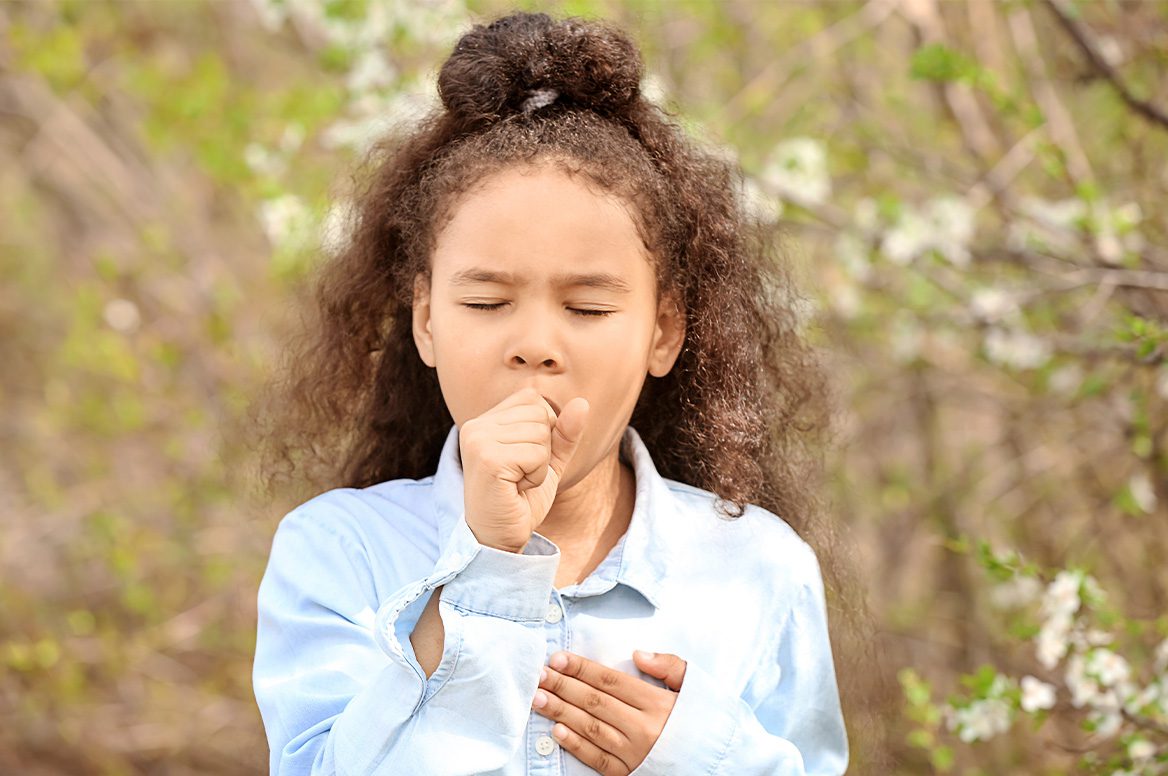






Asthma
Managing Asthma and Allergies at School
When your child with asthma or allergies (or both) starts school, you will probably have a lot of questions, such as:
- How will the school staff help my child avoid asthma episodes/attacks or allergic reactions?
- Will they be exposed to their triggers or allergens?
- Will they have quick, easy access to their medicine? Can they self-carry their emergency medicines?
- Will they be able to make up schoolwork if they miss school days due to asthma or allergies?
- How will the school manage a medical emergency?
Since asthma and allergies are very common among school children, many schools have plans in place to manage these conditions. But each school is different. And each child’s needs are different. Proper planning and a partnership with your child’s school can help you and the school staff create a safe and healthy learning environment for your student.
And you may not need to do every step each year as your child gets older and becomes more independent. Use these steps as a guide as you work with your child’s school.
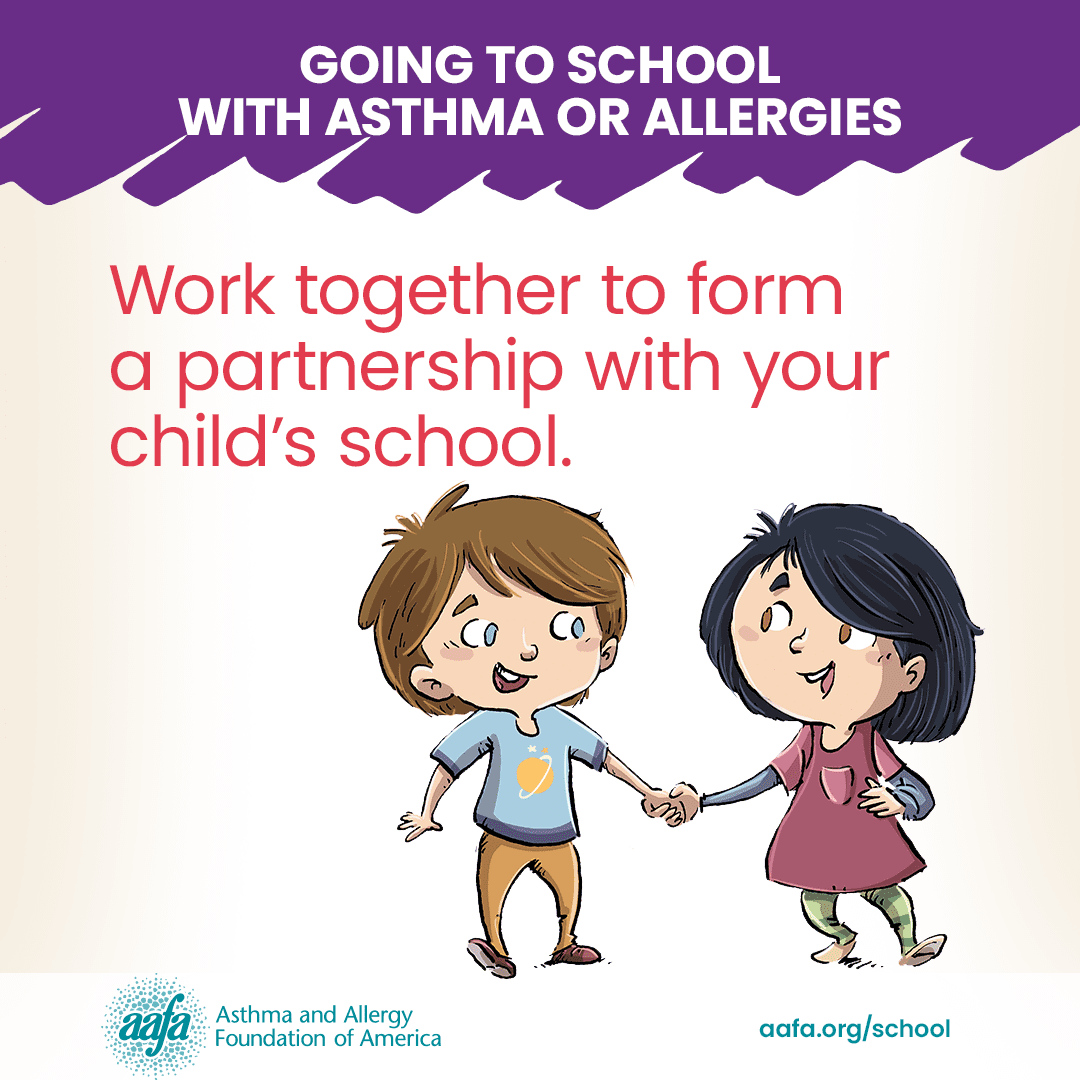 Partner with Your Child’s School About Their Asthma or Allergies
You and your child’s school both want your child to have a quality education in a safe environment. Forming a partnership with your child’s school is key when it comes to successfully managing their asthma and allergies.
Start by communicating with the school about your child’s asthma and allergies in writing. Ask for meetings with key people in the planning process. This often includes the school or district nurse and the primary teacher or sometimes the principal.
Throughout your child’s schooling, you will be working with the school and district staff. Approach it with a positive mindset and tone.
It’s also important to teach your child, in age-appropriate ways, how to manage their condition. This may mean learning how to recognize when they are having symptoms, knowing how to wash their hands, or taking other steps to prevent allergies or asthma.
Related Resources
- SA³MPRO™: Comprehensive Asthma Educational Resources (Visit AAAAI.org)
- Back to School with Food Allergies and Asthma (Visit YouTube)
 Prepare for the Next School Year Well Before First Day of School
Putting everything into place for your child’s care at school can take some time.
Each year, start preparing for the next school year early. Spring is usually the best time to start, especially since some prep will probably continue into the summer. If your child will need accommodation, start that process at the beginning of the calendar year (January or February) when possible.
Here are some of the steps you’ll want to take during the spring and summer to prepare:
- Talk with the school to begin the process to create or update your child’s care plan
- Get copies of the forms you will need to have filled out before school starts and turn them in before the first day of school
- Meet with your child’s doctor over the summer to have school forms signed and refill prescriptions
- Meet with school staff who will be with your child during the school day
At the end of the school year:
- Pick up unused medicines on the last day of school and check expiration dates
Related Resources
- What School Forms Do You Need If Your Child Has Asthma or Food Allergies?
- Summer To-Dos Before You Send Your Child with Asthma or Allergies to School
 Work with the School to Create a School Health Care Plan
Every student with asthma or food allergies should have a school health care plan. A school health care plan lists your child’s common symptoms, medicines, and what to do if they have symptoms. It may also outline what school staff should do to prevent asthma episodes/attacks or allergic reactions.
Three of the most common types of school health care plans are:
- Emergency care plan (ECP)
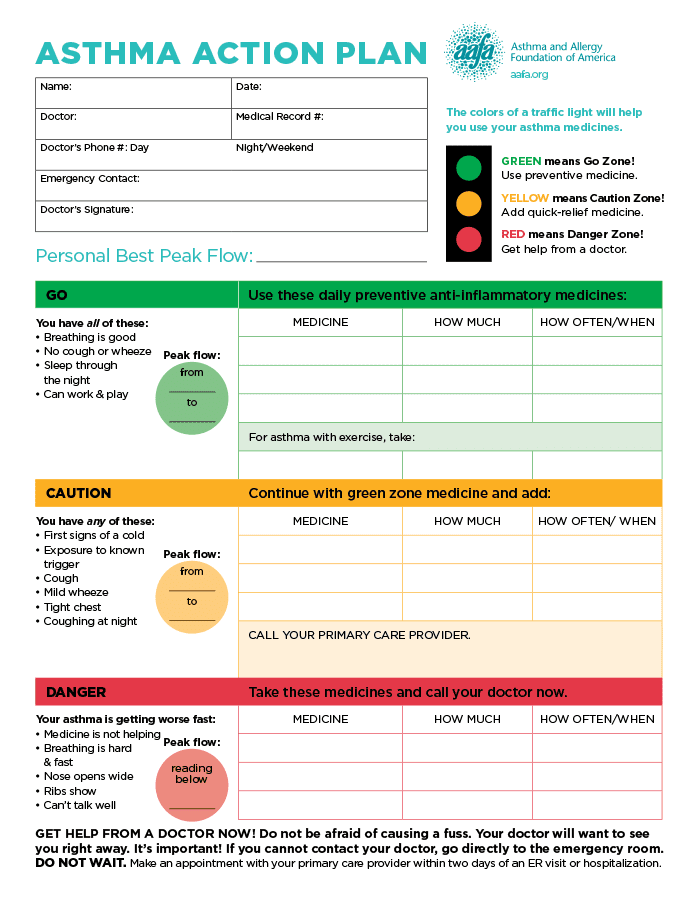
- Asthma Action Plan
- Anaphylaxis Action Plan
- Individual health care plan (IHP or IHCP)
- Section 504 accommodation plan (also known as “504 plan”)
The school health care plan will be created and updated in a partnership between the student’s parents/guardians, the school staff (typically school or district nurse), and the child’s primary care (e.g., pediatrician) or specialist care clinicians (e.g., allergist). Work together to decide which type of care plan is best for your child.
When you meet with the school, discuss:
- Your child’s triggers and allergens
- Your child’s symptoms and their Asthma Action Plan/Anaphylaxis Action Plan
And ask about:
- The school’s existing asthma/allergy management policies
- What the staff will do if your child has symptoms and if there is an emergency
- The process for creating and submitting forms and a care plan
- Where quick-relief asthma medicine or epinephrine will be kept
- If the school provides staff training on asthma/allergies
- Cleaning and handwashing practices
- How the school manages meals in the cafeteria, lunch area, or classroom for students with food allergies
- How students with food allergies request meals with safe substitutions
Related Resources
- School Health Care Plans: a Review of ECPs, IHPs, and 504 Plans
- Asthma Action Plans
- Anaphylaxis Action Plans (Visit kidswithfoodallergies.org)
- Section 504 Plans: Partnering with Your Child’s School for Asthma Accommodations
- How COVID-19 Could Affect School Health Care Plans for Asthma and Allergies
 Meet with Your Child’s Teacher and Other Staff Your Child Will See During the School Day
After you have met with the school nurse or other school representative, set up a meeting with your child’s teacher(s) to talk about classroom management of asthma or allergies.
Talk with them about:
- Allergen and asthma control strategies in the classroom and during “specials” such as music and art
- How to handle classroom celebrations and field trips
- How substitute teachers will be notified about your child’s health needs
Depending on the school and your child’s needs, you may also meet with other teachers, or the school principal, food services director, coaches, and/or athletic director.
Related Resources
- COVID-19 and Asthma Toolkit for Schools
- Teal Classroom™ Kit (printable PDF)

- Potential Food Allergens in Preschool, School, Camp Crafts, and Activities (Visit kidswithfoodallergies.org)
- Non-Food Rewards for Children with Food Allergies (Visit kidswithfoodallergies.org)
 Prevent and Control Asthma and Allergy Symptoms Before School Starts
If your child has asthma, take steps now to prevent episodes or attacks later. It’s much easier to prevent asthma and allergy symptoms before they happen than it is to get them under control.
- Make sure your child’s asthma is under control before school starts
- Prepare for the September Asthma Epidemic
- If your child has allergic asthma, talk with your child’s doctor about starting or adjusting their allergy treatment during the summer
- Get the flu, pneumococcal, and COVID-19 vaccines for your child (as age appropriate) and family members
- Talk with the school about how to reduce asthma and allergy triggers in the school environment
- Ask about the steps the school is taking to reduce the spread of the flu and COVID-19
Related Resources
- 5 Reasons Why Children with Asthma Need Important Vaccines for the Back-to-School Season
- September Asthma Epidemic
- COVID-19 and Asthma Toolkit for Schools
- Is It COVID-19, the Flu, a Cold, Allergies or Asthma?(printable PDF)

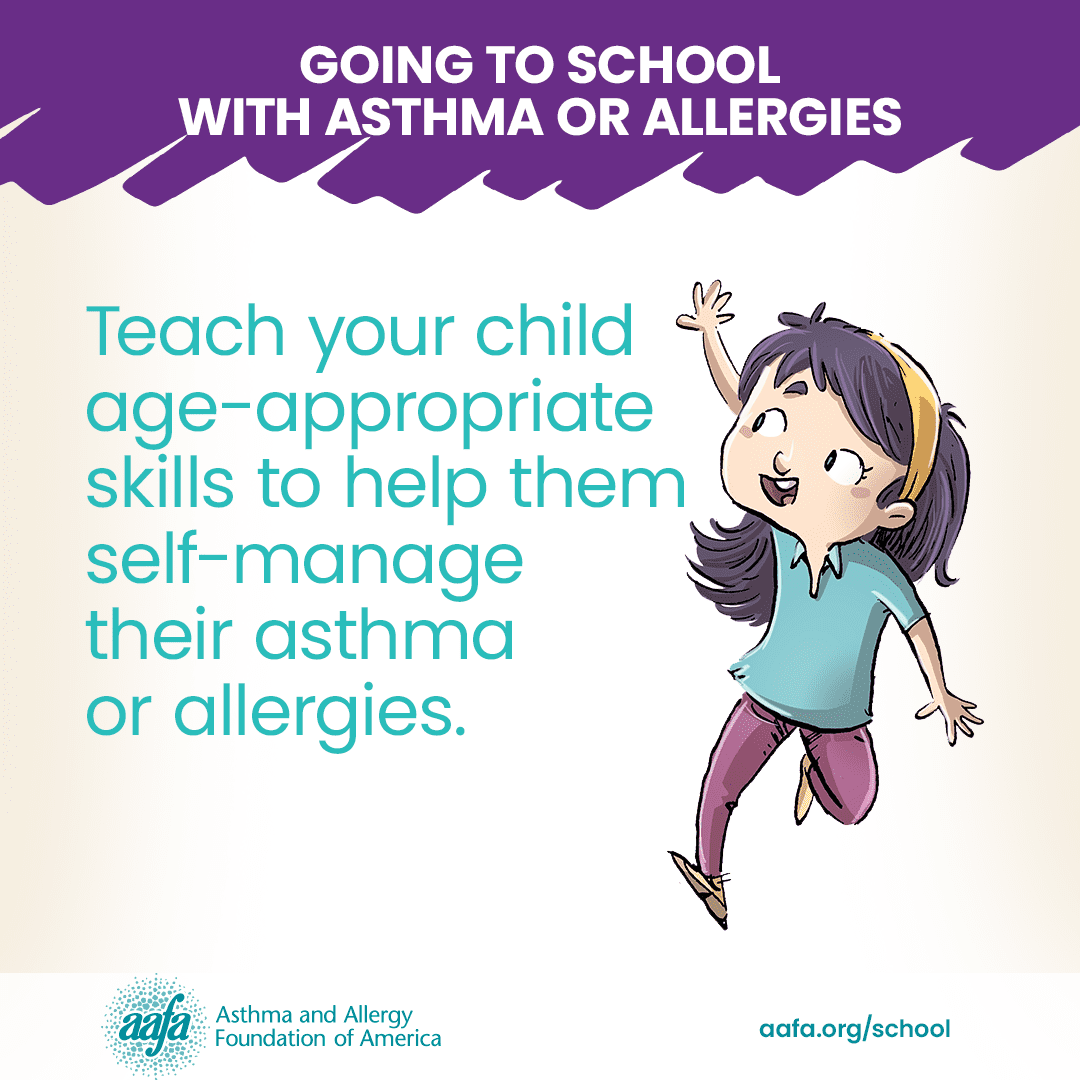 Teach Your Child Age-Appropriate Skills to Help Them Self-Manage Their Asthma and Allergies
As your child grows, teach, and encourage your child to build age-appropriate skills to manage their asthma or allergies.
Some of these skills may include:
- Carrying and using their own medicines
- Recognizing symptoms of asthma or an allergic reaction
- Telling an adult when they are having symptoms
- Washing their hands properly
- Reading food labels or asking for a safe food option if they have food allergies
- Riding on a school bus and going on field trips
- Reporting bullying or harassment
Talk with your child’s doctor about whether or not your child is old enough to self-carry and take their medicines on their own. Talk with the school and your child’s doctor.
Related Resources
- When Is a Child Ready for Self-Care of Anaphylaxis? (Visit kidswithfoodallergies.org)
- Tips for Improving Your Inhaler Technique (Visit YouTube)
 Understand Your Child’s Rights Under State Laws and the Americans with Disabilities Act (ADA)
There are three federal laws that protect students with asthma and allergies:
- Americans with Disabilities Act (ADA)
- Section 504 of the Rehabilitation Act of 1973
- Individuals with Disabilities Education Act (IDEA)
Under the ADA and Section 504, asthma and allergies may be considered disabilities, depending on the severity.1,2 The IDEA and Section 504 ensure children with disabilities have access to “free appropriate public education.”3 Under these laws, you can work with your child’s school for reasonable accommodations for your child.
Check with your state to see if they have laws that protect your child and their right to education. For example, your child also has the right to carry their own medicine. All 50 states have laws allowing children to self-carry their own medicine. Each state has laws that protect this right. But you will need forms on file at the school signed by your child’s doctor that says they can self-carry.
Related Resources
- AAFA’s State Honor Roll: School Policies by State
- Are Asthma and Allergies Disabilities?
- Back-to-School: Students and Asthma Inhalers
- Americans with Disabilities Act (ADA) (Visit ada.gov)
- Section 504 of the Rehabilitation Act of 1973 (Visit ed.gov)
- Individuals with Disabilities Education Act (IDEA) (Visit ed.gov)
Managing a Move to a New School
Each school has a different way of managing asthma and allergies. Your child’s needs will also change as they progress through grade levels. You will need to revisit the school planning process from the beginning each time they change schools, whether they are moving from elementary school to middle school to high school or you move them to a new school and/or district.
A student must be re-evaluated for a Section 504 plan periodically. Section 504 allows school districts to do re-evaluations of a child with a 504 plan in the same manner as the IDEA. The IDEA requires re-evaluation every 3 years (unless the parent and the school division agree it is not required). A student can be re-evaluated more often if the situation changes or the parent or teacher requests re-evaluation.
A re-evaluation should not occur more than once per year (unless the parent and public agency agree otherwise). A 504 plan should be reviewed and, if appropriate, revised each year. A 504 plan can be reviewed or revised at any point during the school year if your child’s needs change.
College with Asthma and Allergies
Even though colleges that get federal funding must follow Section 504 and the ADA, they are held to a different standard than elementary and secondary schools, and do not have to follow your prior 504 plan. If you ask for accommodations that would cause them to change their programs or create undue burden, the college may be able to say no to your request.4 Contact the school’s disability services department with any concerns or questions. If your student has food allergies, also contact dietary services. It’s important to support your teen with growing independence. In the college setting, the student will have to request any accommodations and manage their health.
Related Resources
- 10 Things Teens Forget to Take to College – Asthma Edition (Visit YouTube)
- What to Do If You Get Sick at College – Asthma Edition (Visit YouTube)
- Health Insurance Terms College Students May Not Know – Asthma Edition (Visit YouTube)
Closed
References
- Americans with Disabilities Act of 1990, As Amended. (n.d.). ADA.gov; U.S. Department of Justice Civil Rights Division. Retrieved September 18, 2024, from https://www.ada.gov/law-and-regs/ada/
- U.S. Department of Education, Office for Civil Rights. (2023, July 18). Protecting Students with Disabilities. https://www2.ed.gov/about/offices/list/ocr/504faq.htm.
- U.S. Department of Education, Office for Civil Rights. Individuals with Disabilities Education Act. (2020, November 24). https://sites.ed.gov/idea/about-idea/.
- U.S. Department of Education, Office of Special Education and Rehabilitative Services. (2020, August). A Transition Guide to Postsecondary Education and Employment for Students and Youth with Disabilities. https://sites.ed.gov/idea/files/postsecondary-transition-guide-august-2020.pdf/.

Managing Asthma and Allergies at School
- School Health Care Plans for Asthma and Allergies
- 504 Plans for Asthma
- School Forms for Asthma
- School Planning Resources for Parents of Children with Asthma & Allergies
- Resources for Schools and Care Centers
- Resources for Early Childhood Education and Child Care
- Managing Asthma and Respiratory Infections in Schools
KFA is dedicated to saving lives and reducing the burden of food allergies through support, advocacy, education and research.