


Health Equity
Health Equity
The Asthma and Allergy Foundation of America’s (AAFA) mission is to save lives and improve the quality of life for people with asthma and allergic diseases through support, advocacy, education, and research. Achieving our mission means focusing our efforts on promoting health equity.
What Is Health Equity?
Health equity means a fair chance for everyone to be healthy. If a health condition, like asthma or allergies, affects one group of people differently than another group, it is a health disparity.
People from different backgrounds face different challenges in getting healthcare. Our goal is to remove these barriers so all people with asthma and allergic diseases get the care they need.
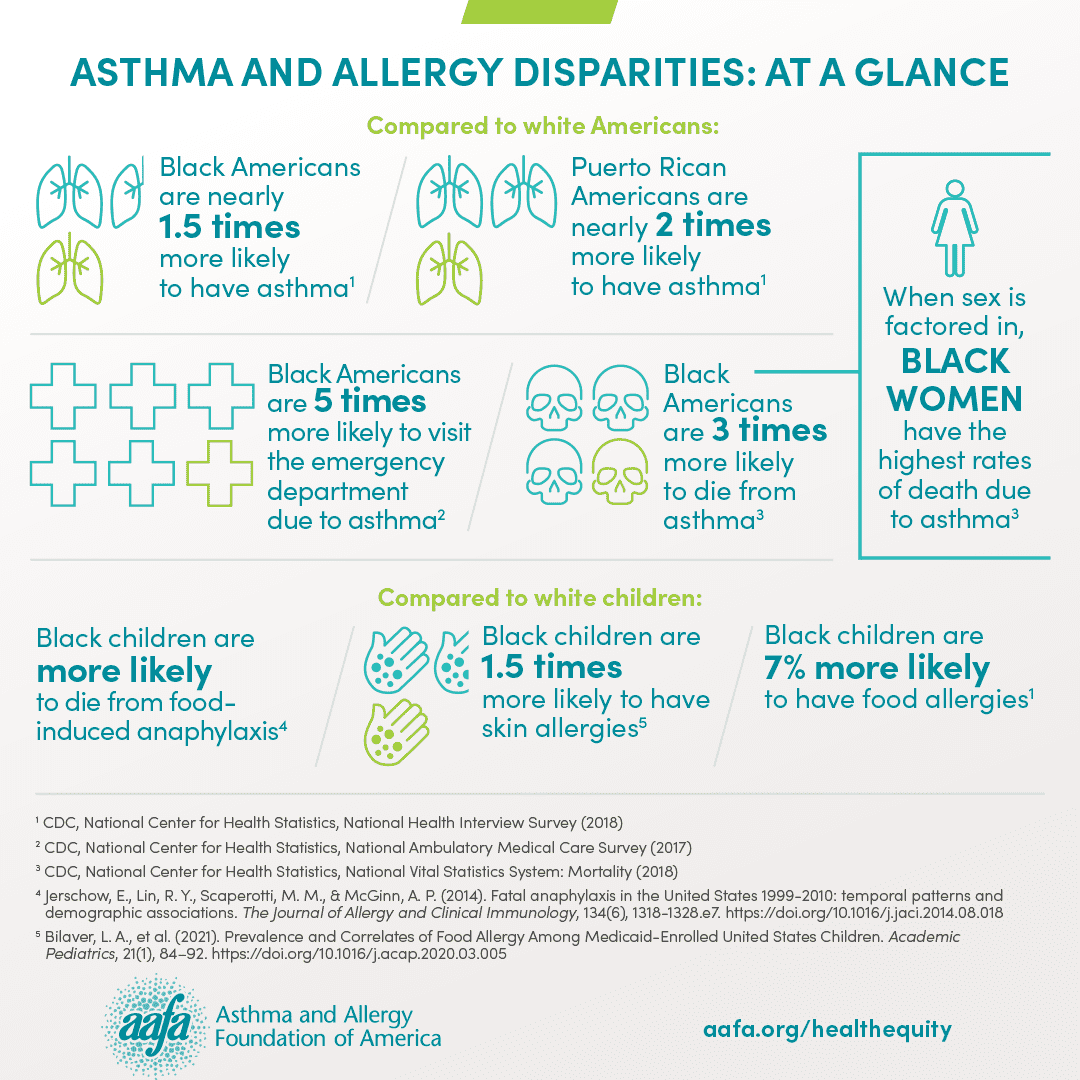
We know that asthma and allergic diseases affect some groups more than others. Black, Hispanic, and Indigenous people experience higher rates of asthma, deaths, and hospitalizations than others. People with low incomes also struggle more with these conditions.
These differences happen because of many factors, including:
- Systemic racism
- Where people live
- Access to doctors and medicine
- Air quality in neighborhoods
- Cost of healthcare
- Cultural barriers
AAFA’s Commitment to Health Equity: HEAL launch
Promoting health equity is a core value and mission-critical priority of AAFA.
AAFA believes everyone should have a fair and just opportunity to be as healthy as possible. We acknowledge the harmful impact of systemic barriers that prevent individuals and communities from achieving their full health potential. AAFA is committed to achieving health equity and improving health outcomes for medically under-resourced people with asthma and allergies. We will do this together by improving access to quality health care, supporting health education, investing in more inclusive research, and engaging in community-based solutions.
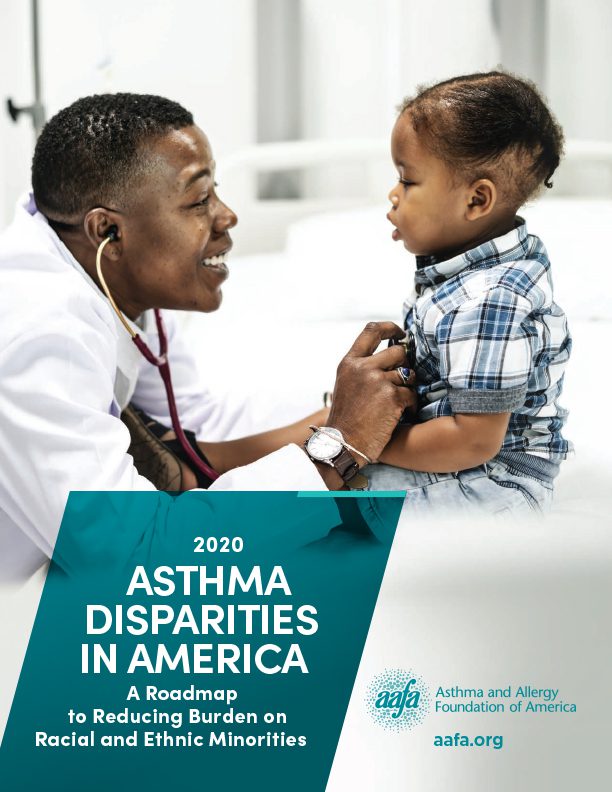
In May 2022, AAFA launched the Health Equity Advancement and Leadership (HEAL) initiative to address findings from our Asthma Disparities in America report. That report detailed wide gaps in asthma prevalence, access to care, and health outcomes, and offered strategies to address racial and ethnic inequities. HEAL supports working with communities that bear the heaviest burden of asthma.
HEAL Grant Awards
As part of AAFA’s HEAL initiative, AAFA funds local interventions (programs) through our HEAL grant awards. This multi-year collaborative project combines AAFA’s national leadership with the knowledge and action of local communities.
Starting in 2022, AAFA began providing funding and support to local programs across the U.S. These local programs save lives, reduce asthma symptoms, and improve the quality of life of people at higher risk and most impacted by asthma and allergic diseases.
2022-2023
In the first round of awards, AAFA supported programs in Chicago, Detroit, Los Angeles, and St. Louis. These programs focused on helping adolescents and adults with asthma. While many asthma programs already exist for children, there are not many for adults. Using best practices from pediatric programs, the HEAL sites developed adult and adolescent programs to meet the unique needs of this population.
AAFA keeps working with these programs to track progress. The goal is to help local communities find long-term funding from insurance companies and other health partners in the future.
The first year of AAFA’s HEAL program was supported by a $1 million sponsorship from Amgen.
2023-2024
In the second round of awards, AAFA funded two new programs in New York and Alabama. The Detroit HEAL program was also expanded for a second year.
The New York program supports Hispanic communities in the Bronx and nearby areas with a Community Health Worker-focused program. High-poverty neighborhoods in the South Bronx—home to predominantly Hispanic and Black residents—continue to experience some of the highest asthma death rates and disease burdens in New York City.
In Alabama, the program will grow its virtual home visit services for youth ages 11–15 and their families. The program also offers easy-to-understand asthma education and tools to help control asthma.
To better reach rural communities, the program created a statewide network of Community Health Workers trained to support families managing asthma. These workers partner with schools, local and state health departments, and other organizations across Alabama to improve asthma care in areas that need it most.
The second phase of AAFA’s HEAL program is supported by ACAAI, Amgen, AstraZeneca, Genentech, Sanofi, Regeneron, and Viatris.
Press Release: AAFA Announces New Health Equity Program Sites Serving Communities Facing Highest Burden of Asthma and Allergic Diseases
2025-2026
For the third round of awards, AAFA supported three additional programs: expansion of the Detroit HEAL program to a statewide (Michigan) model, support for the NYC program for ongoing CHW support to households, and a new program in Allentown, Pennsylvania.
AAFA’s Asthma Capitals™ report identifies the U.S. cities where it is hardest to live with asthma. In 2024 and 2025, Allentown, Pennsylvania, was ranked as the #1 and #3 most challenging city for people with asthma.
AAFA supports the Allentown community through the EASE Allentown: Empowering Asthma Self-Management and Education program. This community-based asthma management program supports older adults with asthma.
Press Release: Asthma Capitals™ Report Drives Policy Change Agenda
The third phase of AAFA’s HEAL program is supported by Chiesi, Genentech, Sanofi, Regeneron, and Viatris.
HEAL Impact
Though the HEAL interventions are ongoing, enrollment and evaluation data to date show that HEAL is reaching and serving people experiencing a disproportionate burden of asthma. HEAL intentionally supports populations most affected by asthma disparities—including Black and Hispanic communities, as well as those who have low-income or rely on Medicaid. Current HEAL site participant data highlight this focus:
- 49% (1 in 2) identify as Black or African American; 34% (1 in 3) as Hispanic or Latinx
- 78% (3 in 4) identify as women
- 53% (1 in 2) report an annual household income of less than $25,000
- 60% (3 in 5) receive Medicaid
- 24% (1 in 4) receive Medicare
Across all HEAL sites, program participants complete a voluntary self-reported survey at baseline, and then again once they have been in the program for 3 months, 6 months, and 12 months. The survey collects data including:
- Asthma severity and control
- Quality of life
- Asthma care experience (health care team, treatments, etc.)
- Asthma management self-confidence
- Social determinants of household health needs (transportation, safe housing, etc.)
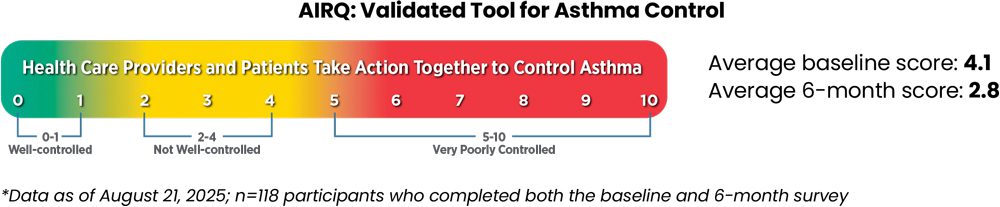
Validated assessments confirm these self-reported improvements. Using the Asthma Impairment and Risk Questionnaire (AIRQ™), participants’ average score improved from 4.1 at baseline to 2.8 at 6 months, showing a clear shift toward better asthma control.
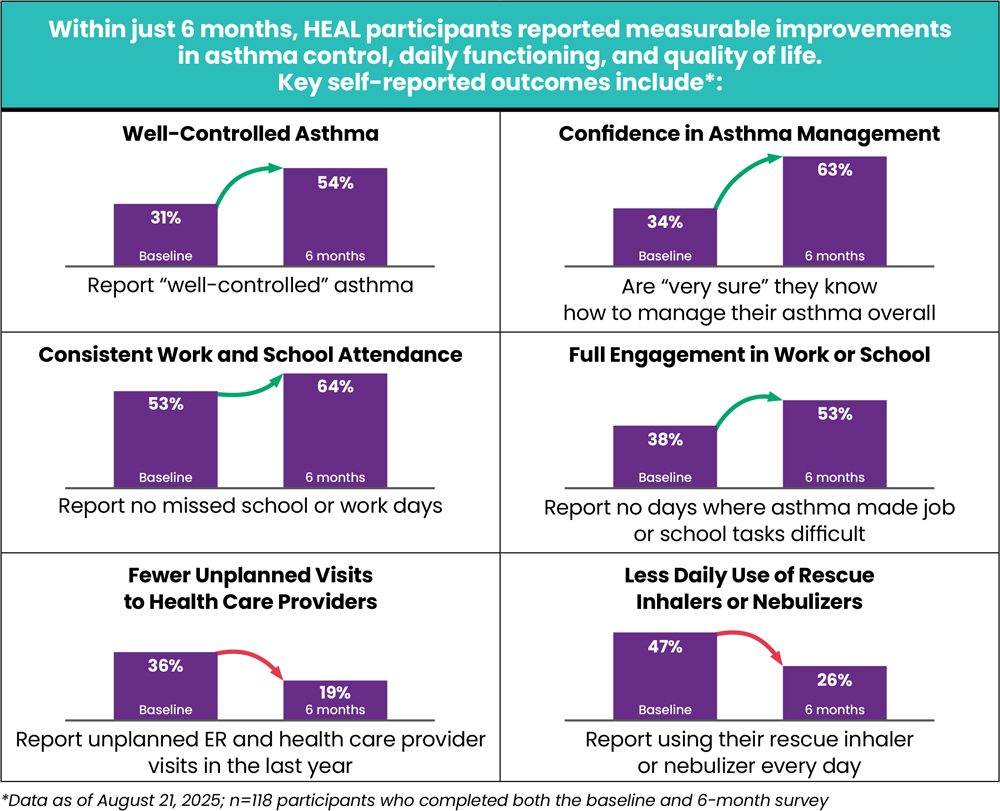
HEAL provides measurable health equity benefits—improving asthma control, restoring productivity, and helping more people with asthma live healthier, fuller lives.
Patient Success Stories & News
Closed Accordion
June: Detroit
June is a Detroit resident in her 70s. June estimates she’s taken up to 100 trips to the Emergency Room in her lifetime because of her asthma. Thanks to HEAL she was referred to an allergist to help manage her asthma. With hew resources, knowledge, and medication, her asthma is now better controlled and she lives a more active lifestyle.
Read more about June and the Detroit HEAL program at the links below.
- AAFA Blog post: Can a Simple Invitation Change Your Life?
- Local Detroit program takes a holistic approach to asthma care
- HEAL program aims to improve Detroiters’ asthma management
- A new ‘holistic’ program for Detroit asthma patients seeks more participants
- Detroit is the country’s fifth worst city for people with asthma, new report stays
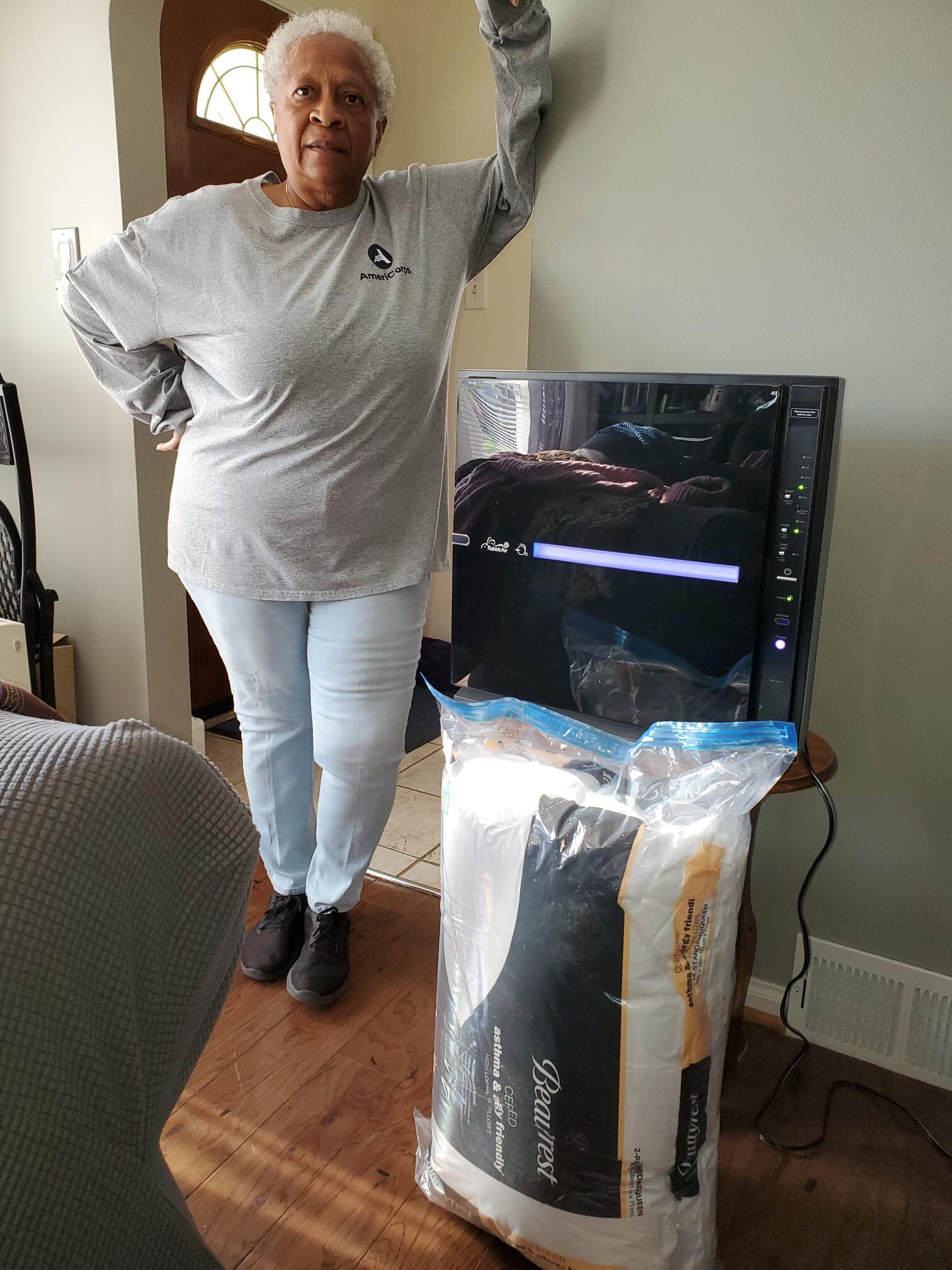
June stands next to her Asthma & Allergy Friendly® Certified donated products
Sherida: Los Angeles
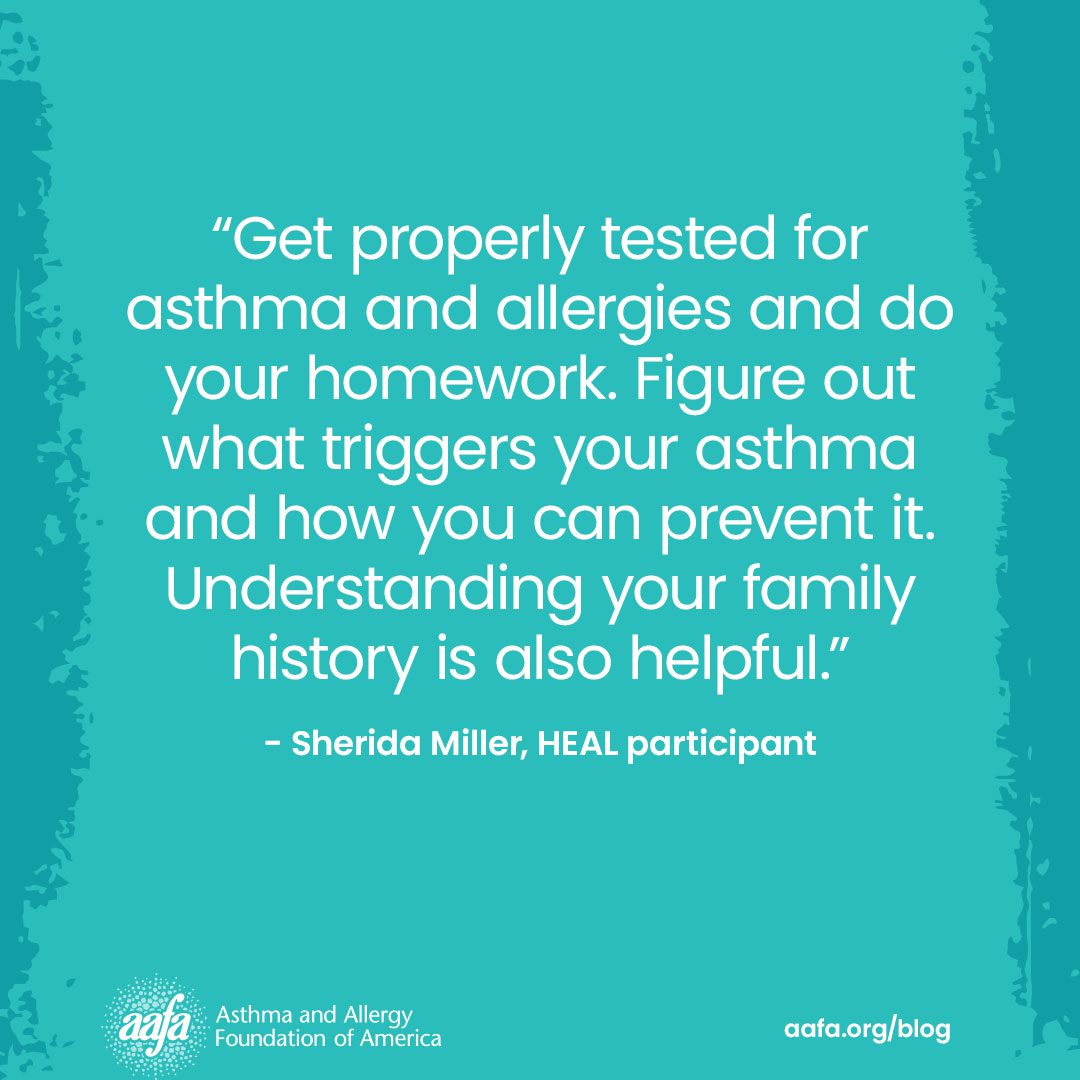
Sherida is one of the many Black women living with asthma in the U.S. Her self-advocacy and commitment to health education are encouraging for anyone living with severe asthma. Sherida, like many other women, was more likely to be diagnosed with asthma in adulthood than men. Sherida also has a strong family history of asthma, which can be an additional risk factor for a diagnosis. Sherida’s doctor referred her to Breathe Southern California’s (Breathe SoCal) Breathe Easier Asthma Management (BEAM) program. Breathe SoCal is one of AAFA’s HEAL sites that works to improve health outcomes locally.
You can read more about Sherida’s story in the link below.
- AAFA blog post: Juneteenth: Celebrating Freedom and Progress While Recognizing Challenges in Health Equity
La Fondria: St. Louis
From the time she was a child, La Fondria recalls having trouble breathing. Her asthma symptoms were often brought on by strong scents or cigarette smoke.
La Fondria spoke with her doctors many times about her trouble breathing. After much self-advocacy, she was diagnosed with asthma and given a quick-relief inhaler.
At first, that seemed to be enough. She experienced better breathing and could manage her symptoms. While La Fondria felt she had her asthma under control, she often wondered if there was more to asthma management than using just a quick-relief inhaler. La Fondria later found the Asthma Care for Older Adults program in St. Louis through the HEAL program. The program helped her learn about tools to manage her asthma, such as an Asthma Action Plan. She also received products through the program that helped improve her indoor air quality and reduce exposure to asthma and allergy triggers.
“I’m so glad I kept looking for answers,” La Fondria said. “And I would encourage anyone to take advantage of a program like HEAL. My life was great before, but it’s even better now that I have all the tools to manage my asthma.”
You can read more about La Fondria’s story and the HEAL St. Louis program in the links below.
- AAFA blog: When an Inhaler Isn’t Enough: The Importance of Asthma Education
- How one St. Louis program is helping improve outcomes for older adults with asthma
Vera: Chicago
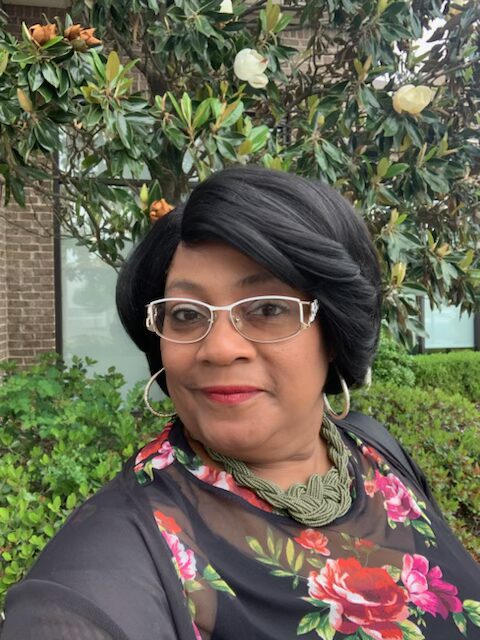
Vera was in her 70s when she finally received an asthma diagnosis. And it wasn’t until a few years later that she found the asthma management answers she’d been seeking for most of her life.
Vera found HEAL by way of the Chicago chapter of the American Lung Association and was connected with the Adults and Adolescents with Asthma Initiative (AAAI). Vera is now approaching 80 and living life with her chronic condition under control. She credits the resources she received through the program for helping with the final pieces of her asthma management puzzle.
You can read more about Vera’s story at the link below.
Select Presentations

A research poster presented at the 2024 National Association of County and City Health Officials (NACCHO) annual conference in Detroit about reducing asthma deaths and illness among high-risk populations through a national program with community-driven actions.
Health Equity Sites and Collaborations
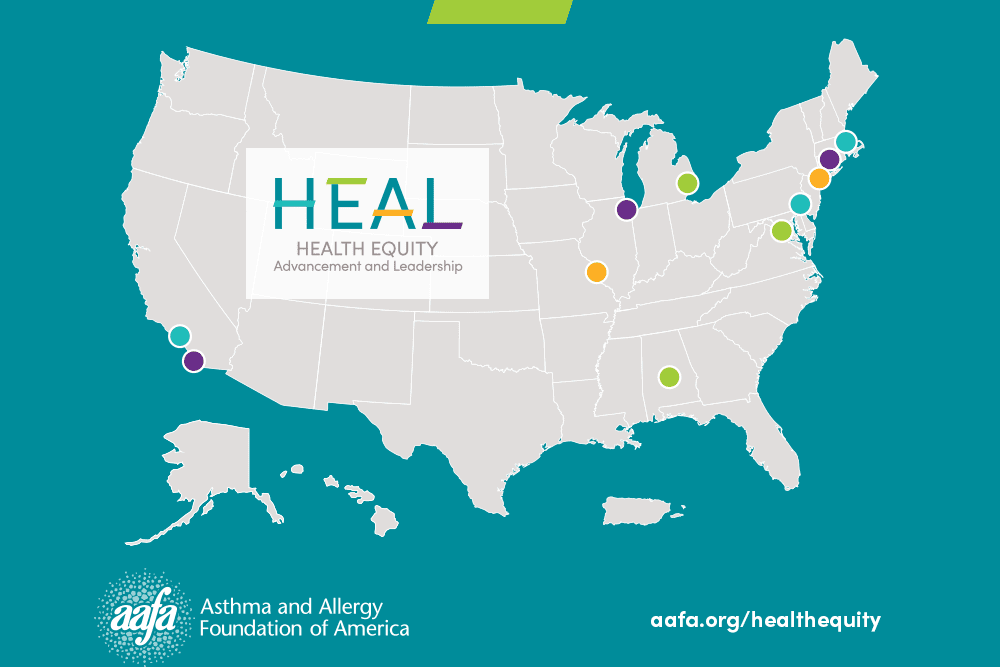
AAFA supports and works with local community organizations and groups, including hospital systems, state asthma control programs, housing advocates, and more across the nation. These programs serve populations at the highest risk of having asthma, needing emergency medical care, or even dying from asthma.
HEAL Grant Awards
Closed Accordion
Alabama
Led by the Virtual Young Teen Asthma & Wellness Camp and the Alabama Asthma Coalition, the HEAL Alabama Asthma Ambassadors program is the first statewide HEAL initiative. The program expanded an existing virtual model by adding in-home asthma management visits and enhanced health education. The program also developed a community health worker network to address rural health disparities. This work is carried out alongside schools, local and state health departments, and other organizations and partners across Alabama.
Allentown
AAFA is supporting the Allentown community by collaborating with the Health Promotion Council of Southeastern Pennsylvania (HPC). The EASE Allentown (Empowering Asthma Self-Management and Education) program uses an innovative outreach approach, working alongside the local health department and emergency medical services to serve older adults living with asthma and other chronic health conditions.
Chicago
AAFA and the American Lung Association in Greater Chicago launched a pilot program for adults and adolescents with asthma. The Environmental Improvements for Adolescents and Adults with Asthma (EIAAA) program includes asthma education, home visits, and other resources for families managing asthma in the Chicago area. AAFA and the Lung Association are members of the Chicago Asthma Consortium.
Detroit & Michigan Expansion
AAFA supported the AAFA Michigan Chapter (AAFA-MI) for three rounds of its pilot HEAL program. This successful, multi-faceted initiative helps improve asthma control by focusing on overall health and wellness, increasing access to specialty care, and assessing home environments for asthma triggers. The program uses AAFA’s ASTHMA Care for Adults curriculum for self-management education. In its first two years, the program focused on the Detroit area and later expanded to serve communities across the state.
Los Angeles
AAFA supported Breathe Southern California’s (Breathe SoCal) launch of its Breathe Easier™ Asthma Management (BEAM) program. The program supports the needs of adults with asthma in underserved communities of Southeast Los Angeles County. Interventions include asthma management education and home visits with an asthma educator. When California’s Department of Health Care Services launched CalAIM (California Advancing and Innovating Medi-Cal), BEAM expanded to include asthma home remediation services delivered by community-based organizations.
New York City
AAFA supported AIRnyc in developing a year-long asthma care intervention tailored for Hispanic families in the Bronx and surrounding areas. Building on a pilot that connected 50 families with asthma education, care, and social services, AIRnyc has a long history of improving health outcomes and reducing disparities in NYC. For over 20 years, its Community Health Workers have delivered in-home support to families with asthma and complex needs. Collaborating with health systems, Managed Care Organizations, and community partners.
St. Louis
AAFA helped launch a new home visiting program in St. Louis for older adults with asthma, in collaboration with Foundation for Asthma and Allergy Impact and Rescue (formerly AAFA St. Louis Chapter) and St. Louis Oasis. The initiative provided group asthma management education, using AAFA’s ASTHMA Care for Adults curriculum in both virtual and in-person formats, along with home visits to help remediate asthma and allergy triggers.
Additional HEAL Collaborations
Closed Accordion
Boston
AAFA worked with the Food Allergy Buddies program at Massachusetts General Hospital for Children and the AAFA New England Chapter. The mission of the Food Allergy Buddies Program is to build a positive and supportive community for children, teens and their families, promote self-efficacy, support quality of life, and reinforce self-respect and safety. The support aimed to help the Food Allergy Buddies program better serve Hispanic and Black families in the Boston area. The program focuses on reaching children who may not otherwise have access to a supportive allergy community or essential food allergy management resources.
Connecticut
AAFA supported the Connecticut Department of Public Health to serve people with asthma in Bridgeport, Hartford, and New Haven. The program features AAFA’s ASTHMA Care for Adults curriculum.
Philadelphia
AAFA provided the Community Asthma Prevention Program (CAPP) at the Children’s Hospital of Philadelphia (CHOP) with Asthma & Allergy Friendly® Certified product donations. The goal was to improve the indoor air quality for 30 high-risk families living in predominantly Black neighborhoods located near fuel and gas refineries. CAPP offers a comprehensive and sustainable community-driven asthma management program for Black, low-income families. CAPP’s program implements asthma self-management education in the child’s home, community, school, and health care environments.
San Diego
AAFA (with support from Sanofi Genzyme and Regeneron) provided Rady Children’s Hospital with a $200,000 grant to expand the AAFA Severe Asthma Program and Community Approach to Severe Asthma (CASA) program. A clinical team of pediatric allergist/immunologists, pulmonologists, pharmacists, social workers, respiratory therapists, and registered nurses evaluate each patient and work together to ensure complete care and self-management education. Children who are seen in the clinic can be referred to the CASA program, which connects high-risk, low-income children and their families with trained community health workers (CHWs). Over half of the children in the program are insured by Medi-Cal (California’s Medicaid program). CHWs help families find and reduce asthma triggers in the home. They also provide free resources and allergen-control products to help reduce these triggers. Rady Children’s location near the U.S.-Mexico border positions it to serve a large Hispanic population.
Washington, DC
AAFA provided Children’s National Hospital’s comprehensive pediatric asthma program, “Improving Pediatric Asthma Care (IMPACT DC), and its partner home visiting program, Breathe DC, with donations of Asthma & Allergy Friendly® Certified products. These products helped 50 high-risk families in predominantly Black neighborhoods address allergen triggers in their homes. IMPACT DC aims to reduce asthma-related emergency room visits and hospitalizations through clinical care and education. Enrollment in IMPACT’s asthma clinic is triggered by recent emergency room visits and hospitalizations among children with poorly controlled asthma. The program offers individualized asthma education and facilitates care coordination among patients, primary care physicians, specialists, case managers, and school personnel. IMPACT also refers patients to home visitor programs, prescription assistance programs, financial counseling, Medicaid enrollment, legal services, tobacco cessation, and other social programs.
Texas
AAFA’s HEAL Texas program will provide adults living with asthma tools and resources to better manage their asthma. The free program will connect individuals to Health Care Originals (HCO) Nightingale Virtual Respiratory Care platform and AAFA’s patient education and support resources. HCO employs AI and a patented wearable device that lets individuals track symptoms like coughing and wheezing, helping to manage respiratory attacks early on. Nightingale Virtual Respiratory Care includes a mobile app and network of pulmonologists, respiratory therapists, mental health therapists, and health coaches that give each individual a personalized, holistic, and effective new level of care. Nightingale also provides essential items through participation in the program, like Wi-Fi access, pest control, and food security. To help improve indoor air quality and reduce exposure to asthma and allergy triggers, participants will also receive an Asthma & Allergy Friendly® Certified air purifier and replacement filter from Rabbit Air.
Denver
AAFA is working closely with Denver area community stakeholders to help identify and understand the drivers of health disparities and the barriers to accessing care among children with asthma in Denver, with a focus on the Globeville, Elyria Swansea (GES) neighborhoods. The project phases include:
- Literature review and landscape analysis of pediatric asthma programs and other resources.
- Stakeholder interviews: AAFA conducted semi-structured virtual interviews with key stakeholders to gather insights on the asthma burden, health disparities, and other barriers to care among children with asthma in North Denver.
- Asthma Roundtable: AAFA held a roundtable in September 2025 with key stakeholders to discuss the strengths of the community and barriers to care. Attendees began discussing steps to address barriers to care.
- Project Roadmap: AAFA continues to work with local stakeholders to support further local collaboration toward closing gaps to asthma care in the GES community.
Support and Funding
We are grateful for the sponsorships, financial contributions, and in-kind gifts that make AAFA’s HEAL program possible:
- American College of Allergy, Asthma, and Immunology (ACAAI)
- Amgen
- AstraZeneca
- Chiesi
- Genentech
- National Minority Quality Forum
- Novartis
- Omron
- PhRMA
- Pegasus Home Fashions
- Rabbit Air
- Renegade Brands USA, Inc.
- Sanofi and Regeneron
- Tarkett
- Viatris
For more information on supporting AAFA’s health equity programs, contact gro.afaa@htlaeh.
Press Releases and Reports
Press Release: AAFA Launches New Health Equity Initiative for Communities Facing Highest Burden of Asthma
Press Release: AAFA Announces New Health Equity Program Sites Serving Communities Facing Highest Burden of Asthma and Allergic Diseases
Press Release: AAFA Announces Innovative Program in Texas Serving Communities Facing Highest Rates of Asthma
Asthma Disparities in America – Full Report (11MB, 264 pages)
Asthma Disparities in America – Executive Summary (1MB, 16 pages)
Press Release: Asthma Disparities in America: A Roadmap to Reducing Burden on Racial and Ethnic Minorities (September 16, 2020)