






Allergy Symptoms
Symptoms of an Allergic Reaction
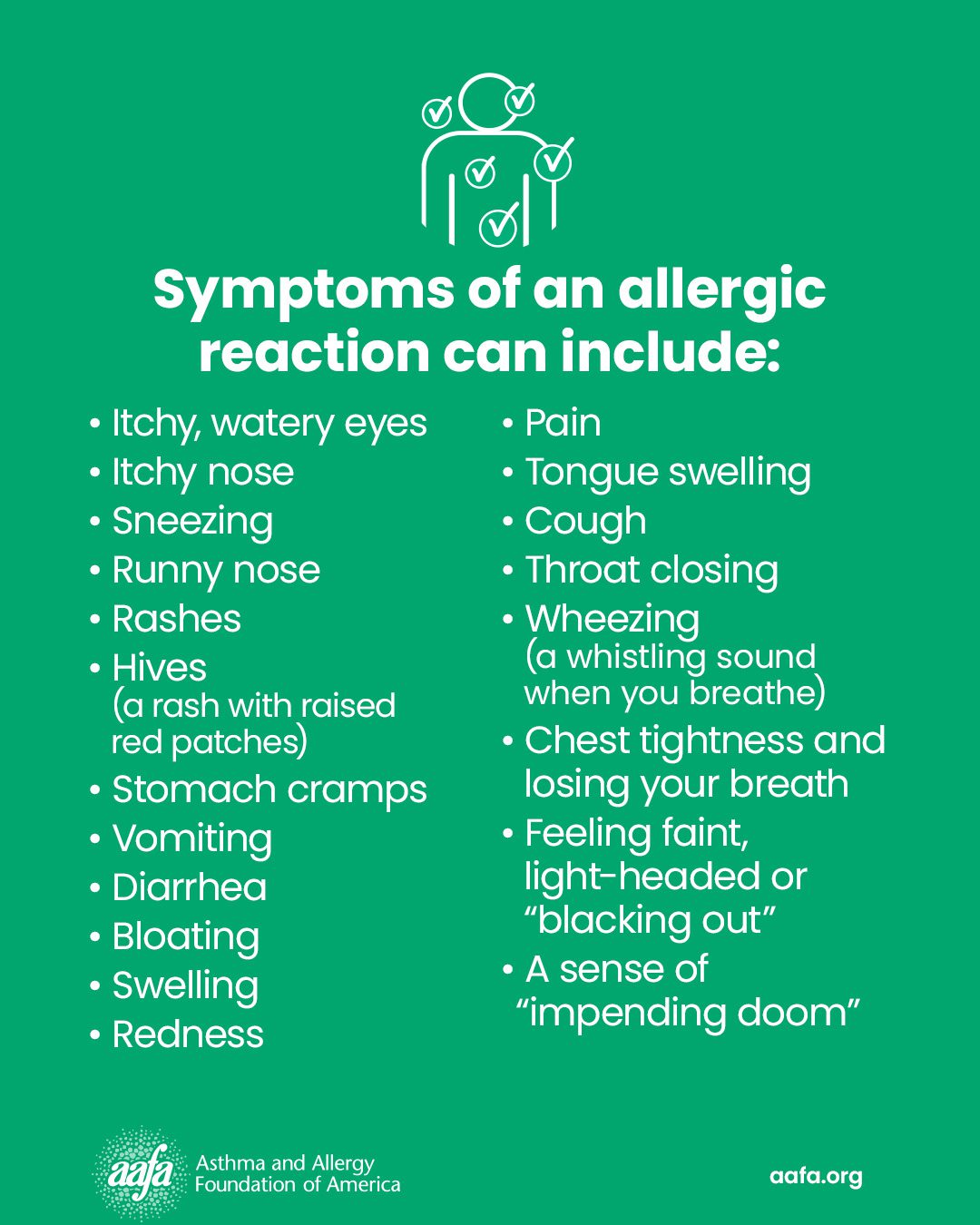
Symptoms of allergic reactions can vary from mild to severe. A person having an allergic reaction may have any of the following:
|
|
Some of these symptoms can be sign of a severe allergic reaction known as anaphylaxis.
Anaphylaxis [anna-fih-LACK-sis] is a severe allergic reaction that can get worse quickly and requires immediate treatment with epinephrine. Symptoms involve more than one part of the body, such as the skin, mouth, lungs, heart, and gut. Learn more about anaphylaxis.
If you think are you or someone you know is experiencing anaphylaxis and you do not have epinephrine, get emergency medical help.
What Triggers an Allergy?
An allergy occurs when the body’s immune system sees a substance as harmful and overreacts to it. The symptoms that result are an allergic reaction. The substances that cause allergic reactions are allergens.
Allergens can get into your body many ways to cause an allergic reaction.
- You can breathe allergens into your nose and your lungs. Many are small enough to float through the air. Examples are pollen, house dust, mold spores, cat and dog dander and latex dust.
- You can ingest allergens by mouth. This includes food and medicines you eat or swallow.
- Your body can have allergens injected into it. This includes medicine given by needle and venom from insect stings and bites.
- Your skin can absorb allergens. Plants such as poison ivy, sumac and oak can cause reactions when touched. Latex, metals, and ingredients in beauty care and household products are other examples.
- Your eyes, vagina, urethra, and other mucosal tissue can come into contact with allergens. Allergens can get into your eyes from the air (like pollen, mold, and animal dander), from your pillow and bedding (dust mites), from touching/rubbing with your hands, or from putting products in or on your eyes (cosmetics, eye drops, lotions). Latex from catheters and condoms can trigger genital allergic reactions.
Eye allergies are common. Eye allergies are a reaction to indoor and outdoor allergens that get into your eyes. The tissue that lines the inside of the eyelid and outside of the eyeball becomes inflamed and swollen and leads to itching, redness, tears, and irritation of the eyes.
Skin allergies occur when your skin comes in contact with an allergen that your skin is sensitive or allergic to. This type of allergic reaction usually appears within 48 hours after the initial exposure to the allergen. Symptoms often include the following: rashes, hives, itching, swelling, or blistering. Common skin allergies include allergic contact dermatitis, eczema, chronic hives, and angioedema.
You can also have skin symptoms with other types of allergies. For example, a food or drug allergy can trigger many symptoms including hives.
Nose allergies are the most common type of allergy. The word rhinitis means “inflammation of the nose.” When the nose becomes irritated by allergens or irritants, it may produce more and thicker mucus than usual. This drainage can irritate the back of the throat and cause coughing. Allergic reactions can also cause congestion, itchy nose or throat, sneezing, a runny nose and itchy, watery eyes. Seasonal allergic rhinitis triggered by pollen is the most common type of nose allergy.
Sinusitis is an infection or inflammation of the sinuses. A sinus is a hollow space. There are many sinuses in the body, including four pairs inside the skull. These sinuses are lined with the same kind of tissue that lines the inside of the nose. The same things that can cause swelling in the nose – such as allergies or infection – can also affect the sinuses. When the tissue inside the sinuses becomes inflamed, mucus discharge is increased. Symptoms of sinusitis include postnasal drip, stuffy nose, bad breath, headache, cough, thick mucus in the nose, pain, and tenderness in the face.
Control your allergies so they don't control you
Allergy symptoms can be prevented and treated. The first step is knowing what you allergic to and avoiding that allergen. The second step is taking medicines or doing allergy treatments. Ask your doctor for a referral to an allergist.
Medical Review: July 2024 by John James, MD and March 2026 by Med Communications, Inc.
Editorial Review: April 2026 by Melanie Carver, Chief Mission Officer
Allergy Capitals
Your location can have an impact on your seasonal allergies. AAFA’s Allergy Capitals® report looks at the top 100 most challenging cities in the contiguous United States to live with seasonal pollen allergies.